How to Choose Workwear Fabric: Blends, Weight and Standards
Workwear fabric is selected on abrasion resistance, tear strength, dimensional stability after industrial laundering and colour fastness. 65/35 polyester-cotton at 200-260 g/m2 suits general purpose uniforms, while ripstop or denim above 400 g/m2 suits heavy industry. EN ISO 13688 is the base standard for protective clothing.
Workwear fabric is engineered differently from everyday apparel fabric: it must withstand abrasion, tearing, frequent laundering and demanding working conditions. The wrong fabric choice leads to premature wear, colour fading, comfort problems and occupational safety risks. As TAÇYILDIZ Boya-Apre Tekstil, producing workwear fabric since 1985, we have compiled what you need to know to choose correctly.
Why Is Workwear Fabric Different?
A workwear fabric may face 50-100 industrial laundering cycles over the garment's life. For this reason the design criteria include not only day-one appearance but also weight loss, dimensional change and colour stability after repeated washing. Corporate identity also requires shade consistency between production lots, which demands a disciplined dyeing and finishing process.
Technical Properties to Look For
- Abrasion resistance: Measured by the Martindale method; 20,000 cycles and above is commonly targeted for workwear.
- Tear and tensile strength: Increased through ripstop construction and high-tenacity yarns.
- Dimensional stability: Shrinkage after industrial laundering is expected to stay within a narrow band, typically 2-3%.
- Colour fastness: Washing, rubbing, light and chlorine fastness, decisive especially in dark shades.
- Comfort: Breathability and moisture management directly affect productivity over long shifts.
- Pilling resistance: A criterion to monitor in blends with high polyester content.
Blend Ratios and Weight Selection
| Blend | Key strength | Typical weight | Suitable use |
|---|---|---|---|
| 100% Cotton | Breathability, skin comfort | 240 - 320 g/m2 | Hot environments, base layers |
| 65% Polyester / 35% Cotton | Dimensional stability, easy care | 200 - 260 g/m2 | General purpose uniforms, service sector |
| 80% Polyester / 20% Cotton | High abrasion resistance | 200 - 250 g/m2 | Logistics, warehousing, technical service |
| Cotton-rich ripstop | Stops tear propagation | 230 - 300 g/m2 | Construction, field, heavy industry |
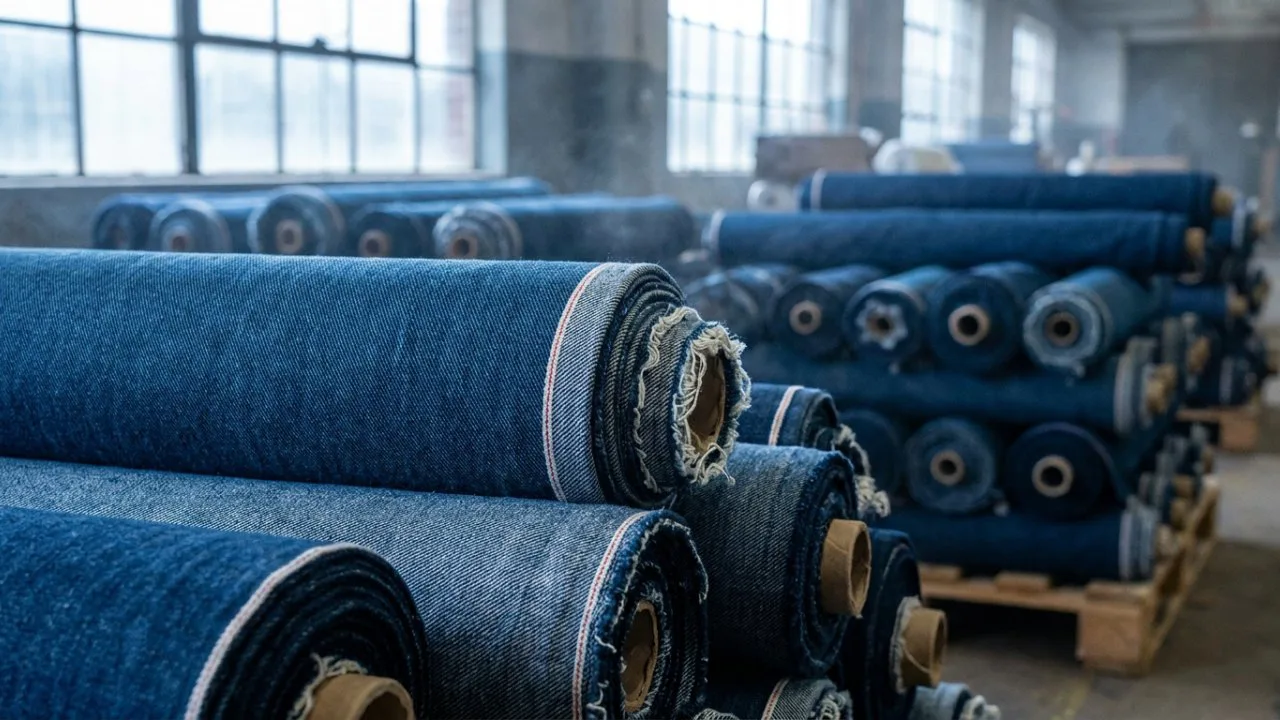
| Heavy denim | Maximum durability | 400 - 550 g/m2 | Workshops, shipyards, heavy duty |
| Elastane blends | Freedom of movement | 230 - 280 g/m2 | Movement-intensive tasks |
General rule: as polyester content rises, durability and dimensional stability increase while breathability decreases. As cotton content rises, comfort improves but so does the tendency to crease and shrink.
Fabric Selection by Sector
| Sector | Priority criterion | Recommended construction |
|---|---|---|
| Construction and field | Tear resistance, visibility | Ripstop twill, higher weight |
| Automotive and manufacturing | Abrasion, oil stain control | Poly/cotton twill, soil-release finish |
| Logistics and warehousing | Comfort, freedom of movement | Poly/cotton with elastane |
| Food and service | Shade stability, easy cleaning | Poly/cotton plain weave |
| Heavy industry | Maximum durability | Heavy denim, canvas |
Standards and Certifications
The standards a garment is subject to are decisive when selecting workwear fabric. General requirements for protective clothing are defined under EN ISO 13688. For applications requiring protection against heat and flame, EN ISO 11612 applies, and for high-visibility environments, EN ISO 20471. OEKO-TEX STANDARD 100, which certifies the absence of substances harmful to human health, is frequently requested by international buyers. Which standard is required is determined by the employer's risk assessment.
Questions to Ask Your Fabric Supplier
- What is the lot-to-lot shade tolerance on repeat orders of the same colour?
- Are test reports for shrinkage and weight loss after industrial laundering shared?
- What is the minimum order quantity and how does the sampling process work?
- What delivery commitment and production capacity can be offered?
- Are sustainability and chemical compliance documents available?
These questions also form the basis of our customer request analysis and planning stages.
Frequently Asked Questions
Which fabric is best for workwear?
There is no single best fabric; the choice depends on the working environment. 65/35 polyester-cotton leads for general purpose uniforms, ripstop or heavy denim for heavy industry, and high-cotton fabrics for hot environments.
What weight should workwear fabric be?
200-240 g/m2 for light service uniforms, 240-320 g/m2 for general field use, and 320 g/m2 and above for heavy-duty applications.
Is polyester or cotton more durable?
Polyester is superior in abrasion resistance and dimensional stability, while cotton leads in breathability and thermal comfort. Blends balance both advantages.
Why do fabric shades differ between production lots?
Small deviations in dye bath conditions, raw material lots and finishing parameters can create shade differences. To reduce this risk, work with a standard recipe, laboratory colour measurement and an approved shade card.
Can I request a sample?
Yes. State your weight, blend and colour requirements and request a sample through our contact page.