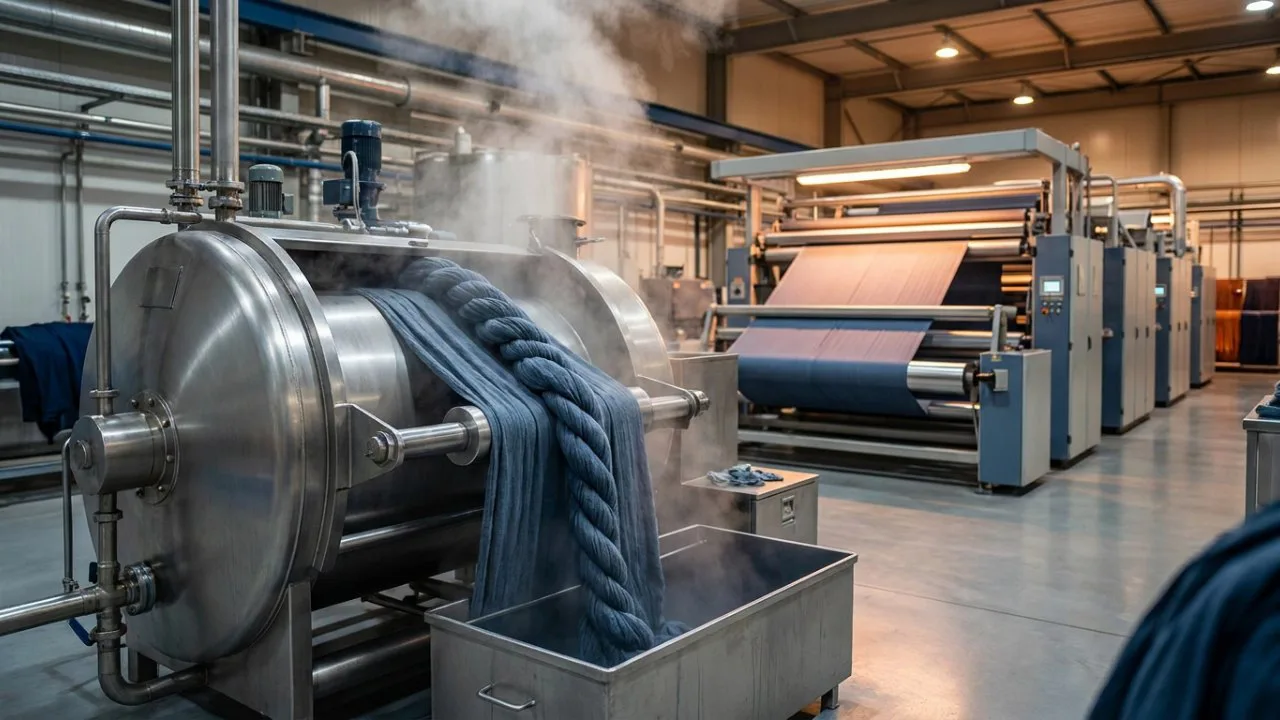
Fabric Dyeing and Finishing Processes: A Step-by-Step Guide
Dyeing and finishing is a three-stage process covering pre-treatment, dyeing and finishing. Pre-treatment includes singeing, desizing, bleaching and mercerisation; dyeing uses indigo, reactive, disperse, pigment and vat methods; finishing sets handle and shrinkage through stenter setting, sanforizing, softening and easy-care treatments.
Dyeing and finishing is the set of textile processes that turns greige fabric into a sellable product. A fabric's colour, handle, shrinkage, crease behaviour and fastness values are all determined at this stage. In other words, the final quality of fabric leaving the loom is largely shaped on the dyeing and finishing line. As TAÇYILDIZ Boya-Apre Tekstil, we have run this process since 1985 and explain it step by step below.
What Is Dyeing and Finishing?
The process consists of three main blocks: pre-treatment, dyeing and finishing. Pre-treatment prepares the fabric for dye, dyeing gives colour, and finishing delivers the required physical and functional properties. Temperature, time, pH and chemical concentration are controlled at every stage; small deviations cause shade differences or handle defects.
1. Pre-Treatment Stages
Singeing
Surface fibres are burned off by passing the fabric over a flame. This produces a smoother, brighter surface suitable for printing and reduces the tendency to pill.
Desizing
The sizing agent applied to the warp before weaving is removed by enzymatic or oxidative methods. If sizing is not fully removed, dye cannot penetrate evenly and streaky, uneven shades appear.
Bleaching
Natural colouring matter in cotton is removed with bleaching agents such as hydrogen peroxide. It is a mandatory step for pale and bright shades.
Mercerisation
The fabric is passed under tension through a sodium hydroxide solution. The cotton fibre swells and its cross-section becomes rounder, increasing lustre, strength and dye uptake.
2. Dyeing Methods
| Method | Application | Key characteristic |
|---|---|---|
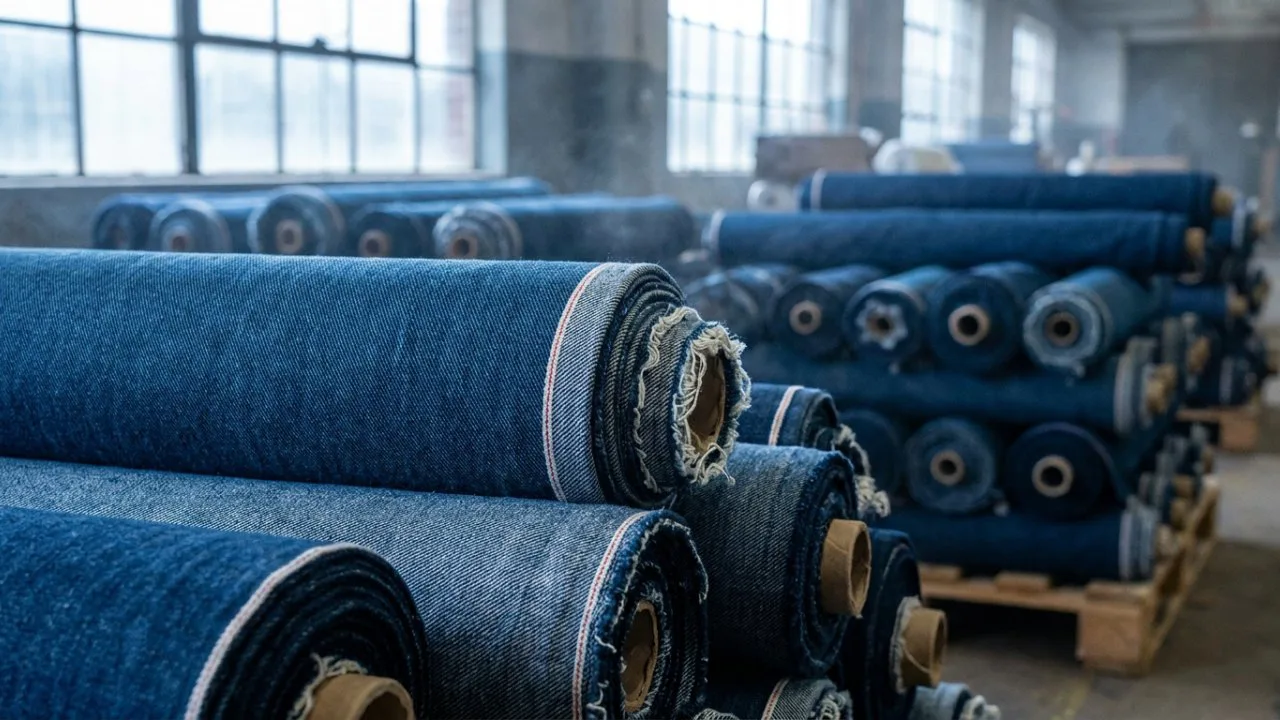
| Indigo (slasher / rope) | Denim warp, before weaving | Ring-dyeing effect, fading character |
| Reactive dyeing | Cotton and cellulosic fabrics | High wash fastness, vivid shades |
| Disperse dyeing | Polyester and blends | Good penetration at high temperature |
| Pigment dyeing | Surface dyeing, vintage effect | Short process, low water consumption |
| Vat / sulphur dyeing | Workwear and denim | High light fastness, deep tones |
Polyester-cotton blends require two different dye classes, so a two-stage dyeing sequence is usually applied, which makes strict laboratory colour measurement essential for shade matching.
3. Finishing Processes
- Stenter setting: The fabric is dried under tension on a stenter frame, setting width and dimensional stability. Finishing chemicals are also applied at this stage.
- Sanforizing (compressive shrinkage): The fabric is mechanically compacted so that shrinkage occurs before the garment is made, typically bringing residual shrinkage below 3%.
- Softening: Handle is improved with silicone or cationic softeners.
- Easy-care finishing: Resin-based finishes reduce creasing, used especially in shirting and uniform fabrics.
- Water and stain repellency: Finishes that lower surface energy delay liquid penetration.
- Calendering / raising: Mechanical finishing applied to obtain lustre or a soft napped surface.
4. Quality Control and Fastness Testing
| Test | Standard | What it measures |
|---|---|---|
| Rubbing fastness | ISO 105-X12 | Colour transfer in dry and wet rubbing |
| Wash fastness | ISO 105-C06 | Shade change and staining in laundering |
| Perspiration fastness | ISO 105-E04 | Colour stability in acid and alkaline sweat |
| Light fastness | ISO 105-B02 | Fading under light exposure |
| Dimensional change | ISO 6330 / ISO 5077 | Shrinkage after laundering |
| Pilling | ISO 12945 | Pill formation on the surface |
Fastness results are rated on a 1-5 grey scale, where 5 is best. Agreeing in writing which minimum grade is required for which test before ordering prevents later disputes.
Sustainability and Resource Efficiency
Dyeing and finishing is the most water and energy intensive link in the textile chain. Low liquor ratio machines, heat recovery from process baths, indigo technologies that cut chemical consumption and water recovery after treatment significantly reduce this load. Our sustainable business partnership approach covers these topics.
Frequently Asked Questions
What does finishing mean in textiles?
Finishing is the general name for treatments applied to fabric after dyeing. It determines handle, dimensional stability and functional properties such as water repellency and crease resistance.
What does sanforizing do?
Sanforizing pre-shrinks the fabric mechanically so the finished garment shrinks less in laundering. Unsanforized fabric shrinks noticeably at the first wash.
What colour fastness grade is acceptable?
It depends on the end use. Grade 4 and above for wash fastness is widely accepted in general apparel, and grade 3-4 dry rubbing for dark shades; indigo denim inherently shows lower rubbing fastness.
How long does the dyeing and finishing process take?
It varies with fabric type, shade and the requested finish combination. Lead time is confirmed together with order quantity and machine scheduling during the planning stage.
Do you offer commission dyeing and finishing?
Share your requirements and fabric specifications through our contact page to request an assessment.