Types of Woven Fabric: Weave Constructions, Properties and Uses
Woven fabric is produced by interlacing warp and weft yarns at right angles. The three basic constructions are plain, twill and satin; twill is the basis of denim and gabardine, while plain weave underlies poplin and canvas. Unlike knits, woven fabric does not stretch unless it contains elastane and offers high dimensional stability.
Woven fabric is produced by interlacing warp and weft yarns at right angles according to a defined weave pattern. With its high dimensional stability, shape retention and durability, it forms the basis of trousers, shirts, jackets, workwear and upholstery products. As TAÇYILDIZ Boya-Apre Tekstil, producing denim and fancy woven fabrics since 1985, we have compiled this guide to the types of woven fabric.
What Is Woven Fabric?
A woven fabric contains two yarn systems: the warp, running along the loom, and the weft, inserted across it. The pattern by which these two systems interlace is called the weave. The weave type directly determines the fabric's drape, surface appearance, strength and stretch behaviour. Unlike knitted fabrics, woven fabrics contain no loop structure and therefore do not stretch on their own; elasticity is achieved only by using elastane-containing yarn.
Woven vs. Knitted Fabric
| Property | Woven fabric | Knitted fabric |
|---|---|---|
| Structure | Warp and weft interlaced at right angles | Yarn formed into loops |
| Stretch | Low without elastane | High |
| Dimensional stability | High | Low, deforms easily |
| Cut edge behaviour | Frays, requires overlocking | Can ladder |
| Typical use | Trousers, shirts, jackets, workwear | T-shirts, sweatshirts, underwear |
Basic Woven Constructions
Plain Weave
The simplest and most widely used construction. The weft passes over one warp and under the next. Both faces look identical and the surface is matt and firm. Poplin, percale, canvas and shantung belong to this group. It offers high dimensional stability and strength.
Twill
The weft passes over two or more warp yarns and under one, with a shift on each row, creating pronounced diagonal lines on the surface. Denim, gabardine and chino are produced with this weave. Compared with plain weave it drapes more softly, creases less and hides soiling better.
Satin / Sateen
Woven with long floats; because interlacing points are sparse, the surface is lustrous and smooth. Drape is excellent, but the surface is more sensitive to abrasion.
Fancy and Derivative Weaves
Constructions such as ripstop, panama, herringbone, dobby and jacquard are used for technical performance or patterning. The ripstop structure stops tear propagation thanks to reinforcement yarns inserted at regular intervals, which is why it is favoured in workwear.
Woven Fabric Types by Raw Material
- 100% Cotton: High breathability and moisture absorption, skin-friendly. Prone to creasing and shrinkage, so finishing processes are critical.
- Polyester/Cotton (65/35 - 80/20): Provides dimensional stability, easy care and abrasion resistance. The most common blend for workwear and uniform fabrics.
- Viscose and Blends: Offers high drape and a soft handle; used in shirting and dress groups.
- Linen and Cotton-Linen: Preferred for summer garments for its cool handle and natural crease texture.
- Elastane Blends: 1-4% elastane provides comfort stretch.
- Recycled Content: Sustainable alternatives containing recycled cotton and polyester.
You can review our product groups under the denim and cotton fabric categories.
Choosing Woven Fabric by End Use
| Product | Recommended weave | Typical weight |
|---|---|---|
| Shirt | Plain, fine twill | 110 - 160 g/m2 |
| Chino / gabardine trousers | Twill | 240 - 320 g/m2 |
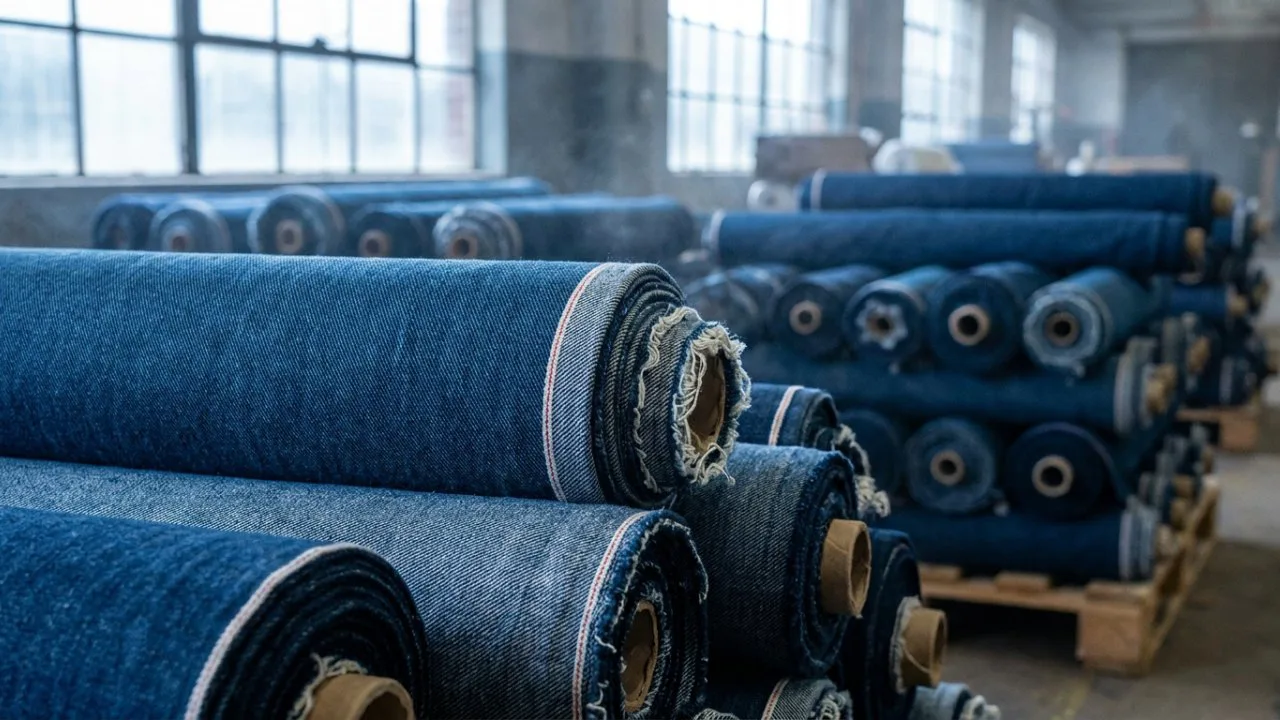
| Jeans | 3/1 twill (denim) | 340 - 460 g/m2 |
| Workwear | Twill, ripstop | 240 - 350 g/m2 |
| Jacket / outerwear | Canvas, twill | 300 - 450 g/m2 |
Quality Control in Woven Fabric
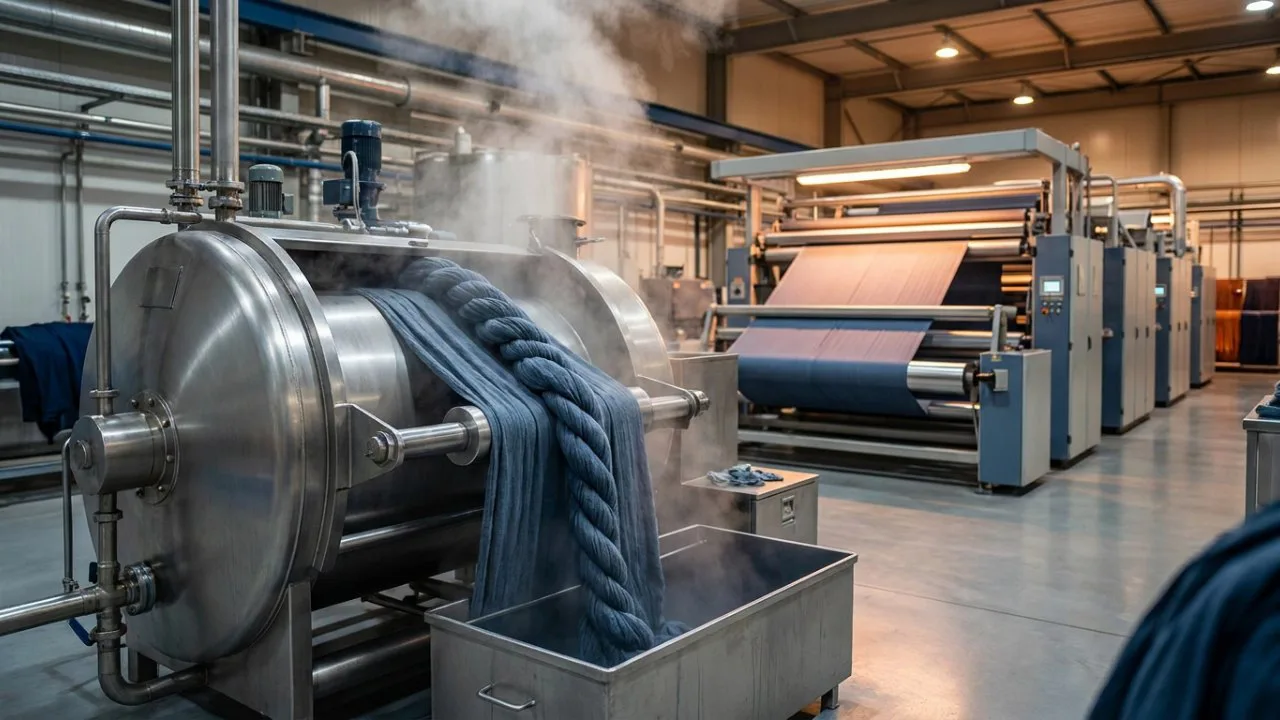
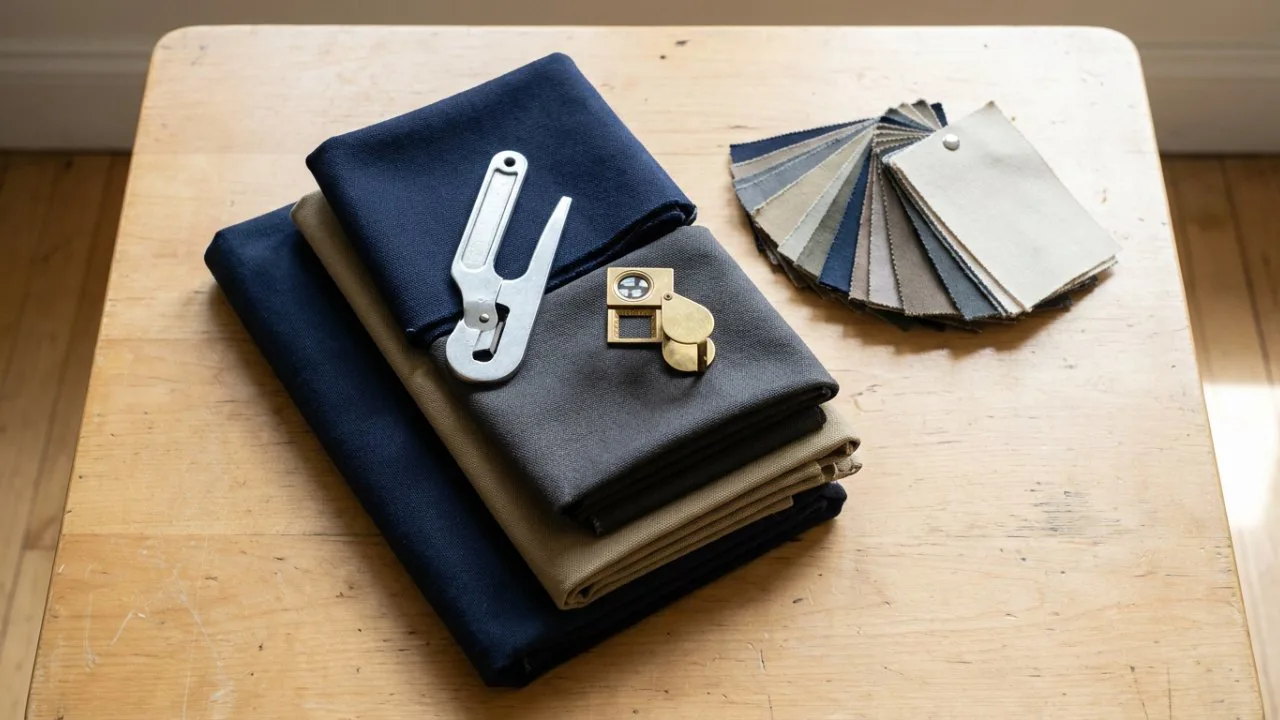
The performance of a woven fabric is determined not only by its weave but also by how correctly the dyeing and finishing process is run. The key checkpoints are colour fastness (rubbing, washing, perspiration, light), dimensional change (shrinkage), tensile and tear strength, pilling resistance, width and weight tolerances, and grading of weaving faults with the four-point system. We apply these controls at every stage of our fabric production processes.
Frequently Asked Questions
Does woven fabric stretch?
Classic woven fabrics do not stretch on their own. Stretch is obtained only when elastane-containing yarn is used or the fabric is cut on the bias.
Which woven fabric is the most durable?
Compared at the same raw material and weight, plain and ripstop weaves lead in tear resistance, while densely woven twills are advantageous in abrasion resistance.
What does woven fabric weight mean?
Weight is the mass of the fabric per square metre (g/m2). In denim, ounces per square yard (oz) is also used; 1 oz corresponds to roughly 33.9 g/m2.
What is fancy woven fabric?
Fabrics patterned with dobby, jacquard or multi-layer constructions beyond standard plain, twill and satin weaves, often containing special yarn effects, are called fancy wovens.
How does the sampling and bulk order process work?
Your requested pattern, colour and quality details are evaluated during customer request analysis, followed by planning. Reach us through our contact page for details.