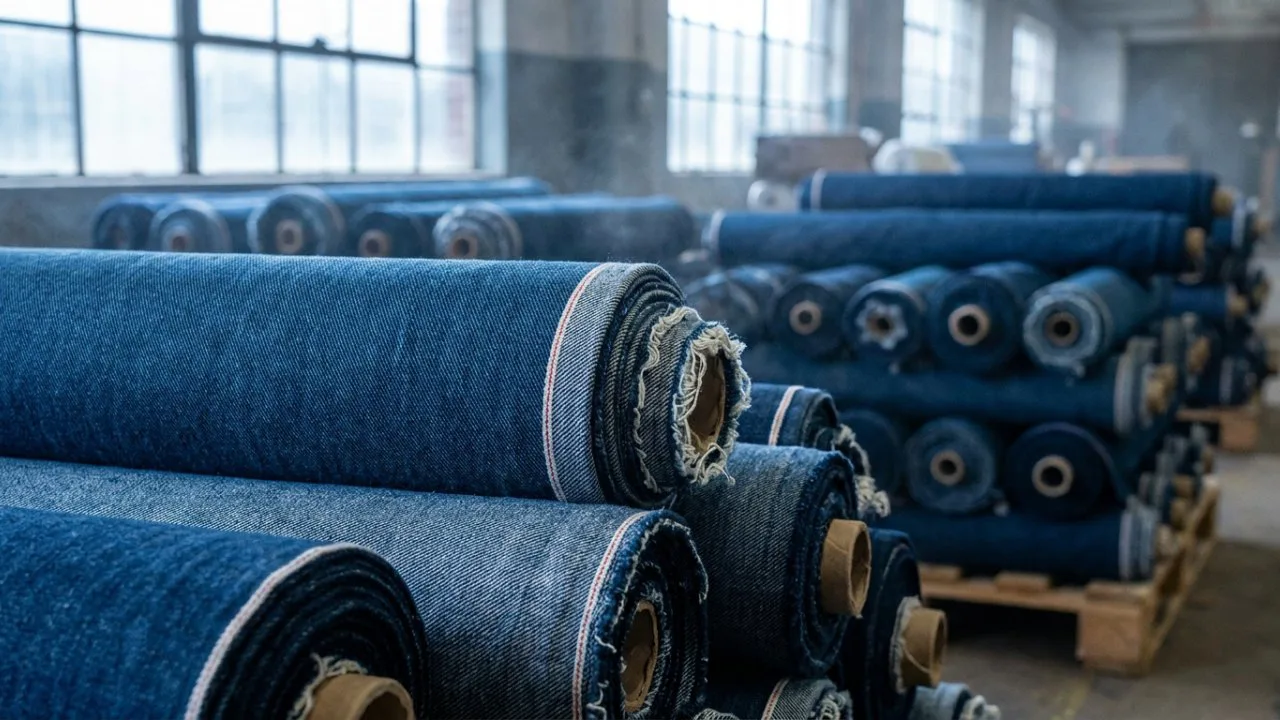
What Is Denim Fabric? Types, Weight Guide and Applications
Denim is a cotton twill fabric with indigo-dyed warp and undyed weft. Its weight ranges from 4.5 oz to 16 oz: 4.5-7 oz for shirts, 10-13 oz for everyday jeans and 12-16 oz for workwear. The main types are ring, open-end, stretch, selvedge and sustainable denim.
Denim fabric is a cotton woven fabric in which the warp yarns are dyed with indigo while the weft yarns are left undyed, woven in a 3/1 or 2/1 twill construction. This structure gives denim its characteristic diagonal surface, durability and the fading behaviour it develops with wear. As TAÇYILDIZ Boya-Apre Tekstil, producing dyed and finished woven fabrics since 1985, we have compiled this guide on denim types, weight selection and quality criteria.
What Is Denim Fabric?
Denim takes its name from the French city of Nîmes ("serge de Nîmes") and is a warp-faced twill fabric. The face of the fabric is dominated by indigo-dyed warp yarns, while the back shows mostly undyed weft. The defining feature of denim is that indigo does not fully penetrate the yarn — a phenomenon known as ring dyeing — leaving the yarn core white. As the surface dye abrades through washing and wear, the white core is revealed, producing the fading effect unique to denim.
How Is Denim Fabric Produced?
Unlike a standard woven fabric, denim is dyed before weaving:
- Yarn spinning: Cotton fibre is spun into yarn using ring or open-end systems.
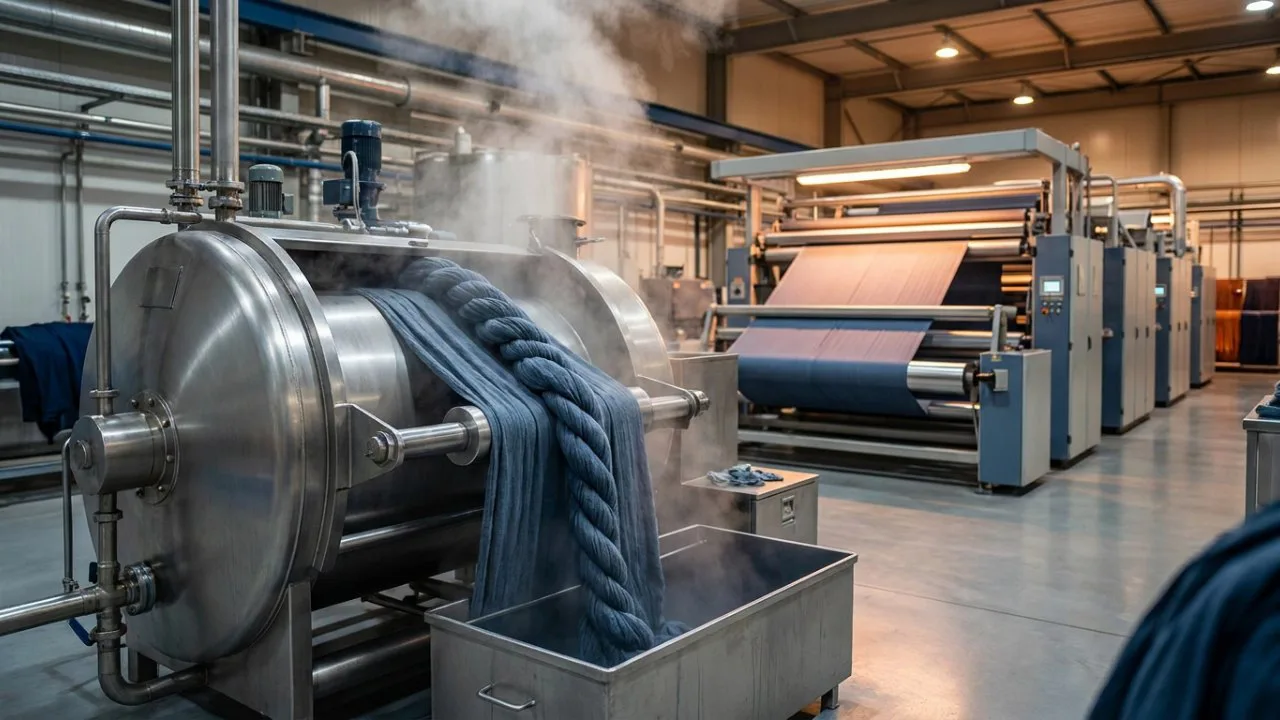
- Indigo dyeing: Warp yarns pass through successive indigo baths on slasher or rope dyeing lines. After each dip the yarn is exposed to air so the indigo oxidises and the shade deepens.
- Sizing: A sizing agent is applied to the dyed warp to prevent breakage during weaving.
- Weaving: The indigo warp and undyed weft are woven in a twill construction.
- Dyeing and finishing: Greige denim is desized, singed, sanforized and given the required finishes to reach its final width, handle and shrinkage values. We carry out this stage as part of our fabric production service.
Types of Denim Fabric
Ring Denim
Produced from ring-spun yarn, this denim shows slubs and thickness variations that create a livelier, vintage appearance. It has a soft handle and high strength, and is preferred for premium collections.
Open-End (OE) Denim
Woven with open-end yarn, this denim has a flatter and more uniform surface. Its cost advantage makes it common in high-volume production and workwear applications.
Stretch (Elastane) Denim
Elastane is used in the weft, or in both weft and warp. Weft-stretch products typically contain 1-3% elastane, while dual-core constructions use twin-core yarns that improve recovery performance. It provides comfort in skinny and slim fits.
Selvedge Denim
Woven on narrow shuttle looms, selvedge denim has a self-finished, non-fraying edge. Because production speed is low, its cost is higher; it is used in the boutique and premium segment.
Comfort / Light Denim
Low-weight denims with a soft handle, used in shirts, dresses and summer garments.
Sustainable Denim
Denim containing recycled cotton, recycled polyester or organic cotton, produced with indigo technologies that reduce water and chemical consumption. This sits at the centre of our sustainable business partnership approach.
How to Choose Denim Weight
Denim weight is expressed in ounces per square yard (oz). One oz corresponds to roughly 33.9 g/m². Recommended ranges by product type:
| Weight | Approx. g/m2 | Suitable product |
|---|---|---|
| 4.5 - 6 oz | 150 - 205 | Shirts, dresses, summer garments |
| 6 - 8 oz | 205 - 270 | Lightweight trousers, jacket lining, childrenswear |
| 8 - 11 oz | 270 - 375 | Stretch trousers, everyday jeans |
| 11 - 14 oz | 375 - 475 | Classic jeans, jackets, rigid denim |
| 14 - 16+ oz | 475 - 545+ | Workwear, heavy-duty trousers, selvedge |
When selecting weight, consider not only the mass but also the weave construction and elastane content. Two denims of identical weight can deliver completely different handle and drape if yarn count and weave density differ.
Quality Criteria for Denim Fabric
- Colour fastness: Rubbing (ISO 105-X12), washing (ISO 105-C06) and perspiration fastness values. Indigo inherently has low rubbing fastness; the target for dry rubbing is typically grade 3-4.
- Shrinkage: After sanforizing, length and width shrinkage is usually held within 3%.
- Tensile and tear strength: Decisive in workwear and heavy-use garments.
- Skew: Leg twist caused by the twill construction is corrected during finishing.
- Elastane recovery: Prevents bagging at the knee in stretch denim.
Frequently Asked Questions
What is the difference between denim and jeans?
Denim is the name of a fabric; jeans is the name of a garment made from it. Every pair of jeans is made from denim, but denim is also used for shirts, jackets and bags.
Does denim fabric shrink?
Sanforized denim has low shrinkage, generally under 3%. Raw or rigid denim shrinks noticeably at the first wash.
What weight should denim fabric be?
10-13 oz is common for everyday jeans, 4.5-7 oz for shirts and 12-16 oz for workwear.
How much elastane should stretch denim contain?
1-2% for light comfort and 2-4% for high-stretch fits. As the ratio increases, dual-core yarn becomes important for recovery performance.
How do I place a bulk denim fabric order?
Share your pattern, colour, weight and delivery requirements and request a sample through our contact page. The process runs through customer request analysis and planning.
TAÇYILDIZ Boya-Apre Tekstil A.S. has been producing denim, workwear fabric and fancy woven fabrics in Merter, Istanbul since 1985. You can browse our denim fabric collection.